Before October 7
The Scholar in Chelsea
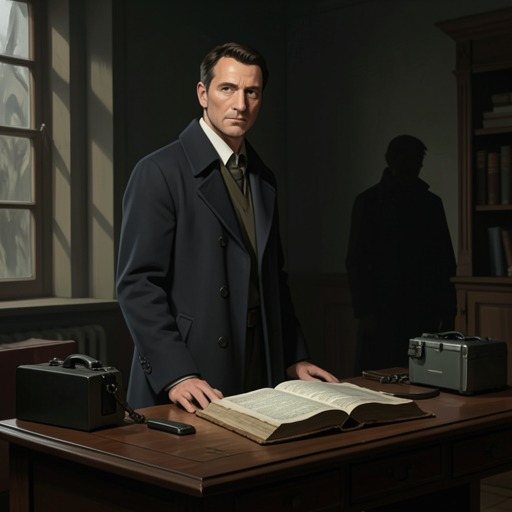
[Mark Easterbrook](entity:character-recall-character-mark-easterbrook-d6046de28bc6), a historian living temporarily in [Chelsea](entity:location-recall-location-chelsea-a4c781a37b29), abandons his work on Mogul architecture during a fit of disgust with scholarship. At [Luigi’s coffee bar](entity:location-recall-location-luigi-s-coffee-bar-91c5778da86e), he broods on modern dangers and the theatrical force of evil, convinced that ordinary stability will eventually prevail.
His detached reflections give way to an unexpected glimpse of the world around him. The young patrons and their violence pull him out of his private, bookish existence.
Before October 7
Tommy and Lou Fight
At [Luigi’s coffee bar](entity:location-recall-location-luigi-s-coffee-bar-91c5778da86e), [Thomasina Tuckerton](entity:character-recall-character-d8678bac8c14) and Lou erupt into a fight over Gene Pleydon, whom Thomasina has attracted away from Lou. Lou tears out tufts of Thomasina’s hair while the other patrons cheer and the proprietor hides the evidence from a policeman.
Thomasina calmly insists that the hair-pulling did not hurt. Mark remembers the scene as a row among fashionable young people, but the detail later becomes a vital clue to the method behind a series of seemingly natural deaths.
A week after the coffee-bar fight
Tommy’s Death Notice
Mark notices in [The Times](entity:organization-recall-organization-f40c542d0312) that Thomasina has died at Fallowfield Nursing Home, aged twenty. The announcement says that the funeral will be private and asks for no flowers.
Her death prompts Mark to question his judgment of her unconventional life. He wonders whether his own safe, scholarly existence may be the more wasted one, before turning his attention to a letter from his cousin [Rhoda](entity:character-recall-character-rhoda-14d52aa8ccf2).
October 7 in the early evening
Gorman’s Summons
A boy named Mike Potter arrives at the presbytery with a message that a dying woman at [23 Benthall Street](entity:location-recall-location-23-benthall-street-d96796f3a64f) wants a Catholic priest. [Mrs Coppins](entity:character-recall-character-560694fe49c4) confirms that her lodger, Jessie Davis, has specifically asked for one.
[Father Gorman](entity:character-recall-character-father-gorman-380bbabfb1e1) sets out with his small case, not knowing that the woman’s request will draw him into a dangerous secret. The message begins the chain of events that leads to his murder.
October 7, shortly after 7 p.m.
The Deathbed Confession
At [23 Benthall Street](entity:location-recall-location-23-benthall-street-d96796f3a64f), [Father Gorman](entity:character-recall-character-father-gorman-380bbabfb1e1) finds Jessie Davis gravely ill and struggling to speak. She confesses to grievous wrongdoing, speaks of wickedness, and tells him that something must be stopped.
The priest promises to do what is necessary, giving her the reassurance she seeks. Her confession supplies him with information that he writes down immediately, while leaving the precise nature of her knowledge unknown to those around her.
October 7, after the visit
The List on a Paper Bag
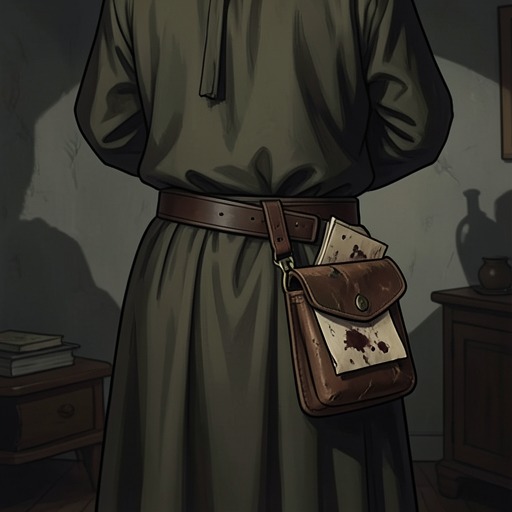
Walking back through the gathering fog, [Father Gorman](entity:character-recall-character-father-gorman-380bbabfb1e1) stops at [Tony’s Place](entity:location-recall-location-tony-s-place-fdaf87315200) to record names before he forgets them. Unable to reach his notebook, he writes on a torn paper bag and hides the folded scrap in his shoe because his cassock pocket has a hole.
Among the names are Ormerod, Sandford, Parkinson, Hesketh-Dubois, Shaw, Harmondsworth, Tuckerton, and two uncertain entries. The list is the only surviving trace of what Jessie Davis told him.
October 7, around 8 p.m.
The Murder in the Fog
A man follows [Father Gorman](entity:character-recall-character-father-gorman-380bbabfb1e1) from [Tony’s Place](entity:location-recall-location-tony-s-place-fdaf87315200) as the priest takes a shortcut near the railway. In [West Street](entity:location-recall-location-west-street-99efe32e9165), the pursuer strikes him repeatedly with a cosh and leaves him dead in the fog.
His pockets are turned out and his cassock lining is ripped, but the murderer misses the paper concealed in his shoe. Two boys find the body soon afterward, turning the priest’s death into a police investigation and protecting the list from destruction.
October 7, shortly before the murder
The Chemist’s Observation
[Zachariah Osborne](entity:character-recall-character-zachariah-osborne-4fd85d572f30) watches from his pharmacy doorway as [Father Gorman](entity:character-recall-character-father-gorman-380bbabfb1e1) walks through the fog with another man behind him. He notices the follower pause when the priest slows, then resume after him; a brief clearing in the fog and a lighter’s flare let Osborne study the man’s distinctive profile.
Osborne later insists that the follower looked like [Mr Venables](entity:character-recall-character-mr-venables-bf0925671fe2), a resemblance that initially sends suspicion in the wrong direction. His account is unusually detailed, but its certainty conceals a lie about where he himself was standing.
The day after the murder
The First Police Inquiry
[Inspector Lejeune](entity:character-recall-character-d2b6fc66c07f) and [Dr Corrigan](entity:character-recall-character-c4ad1c237f17) review the killing and learn that the assailant searched [Father Gorman](entity:character-recall-character-father-gorman-380bbabfb1e1)’s clothes. The scrap in the priest’s shoe changes the case: it contains a list of names, including Corrigan and the recently deceased [Lady Hesketh-Dubois](entity:character-recall-character-90a8abe644cf).
Lejeune considers whether Jessie Davis’s confession concerned blackmail or another criminal scheme. Corrigan notices question marks beside the final names, but neither man can yet explain what the list represents.
During the first police inquiry
The First Mention of Blackmail
Lejeune proposes that the names may belong to people connected by blackmail and that Jessie Davis wanted to make reparation before dying. If someone profited from the racket, the person may have killed [Father Gorman](entity:character-recall-character-father-gorman-380bbabfb1e1) to keep the confession from being exposed.
The theory remains only a working hypothesis. The absence of addresses and the uncertainty of some names make the list difficult to investigate, while the possibility of an ordinary robbery cannot yet be ruled out.
Soon after the murder
Coppins Describes Davis
Lejeune questions [Mrs Coppins](entity:character-recall-character-560694fe49c4) about the quiet lodger who died at [23 Benthall Street](entity:location-recall-location-23-benthall-street-d96796f3a64f). She recalls Jessie Davis as a methodical consumer-research interviewer, a widow with few possessions, no photographs or papers, and a suitcase whose original initials had been painted over.
During her illness, Davis worried about having time to think and wondered whether it was better not to know when something was wrong. Those scattered remarks suggest concealed guilt, though Mrs Coppins cannot identify its source.
During Lejeune’s interview with Coppins
Davis’s Last Request
[Mrs Coppins](entity:character-recall-character-560694fe49c4) remembers Jessie Davis insisting on a Roman Catholic priest and recalls hearing her speak of wickedness and perhaps a horse. She had assumed that the reference concerned racing, but Lejeune recognizes that the words may point to something more sinister.
The detail strengthens his suspicion that [Father Gorman](entity:character-recall-character-father-gorman-380bbabfb1e1) was killed because of what he learned from Davis. Her choice of priest and her final warning now appear to be connected to the names he carried away.
Soon after the murder
Osborne’s Ambition
Lejeune interviews Osborne, who describes the follower as tall, thin, and striking, with a hooked nose and prominent Adam’s apple. Osborne says he would recognize the man again and admits that he has long hoped to identify a murderer and testify in court.
His eager account seems to offer a valuable witness, although Lejeune privately questions how anyone could have seen so much through the fog. Osborne’s desire for a dramatic role is already visible beneath his respectable manner.
After the murder
Ariande Oliver’s Writer’s Block
Mark visits [Ariadne Oliver](entity:character-recall-character-ariadne-oliver-fa78f34dbffd) to ask her to help at [Rhoda](entity:character-recall-character-rhoda-14d52aa8ccf2)’s church fête. She is in a state of creative torment, wrestling with a fictional cockatoo and the problem of how to make a murder plot work.
The conversation turns to whether a person could be killed through black magic. Mark answers skeptically, while Ariadne wonders aloud about remote influence and the power of suggestion—ideas that will return in far more consequential form.
A few days after Mark visits Ariadne Oliver
Poppy Names the Pale Horse
At the [Fantasie](entity:location-recall-location-fantasie-81cf5daf8dad), Mark and Hermia dine beside David Ardingly and his companion, [Pamela Stirling](entity:character-recall-character-fba09824173b), known as [Poppy](entity:character-recall-character-poppy-c84928bef5a1). The conversation ranges from Macbeth and village witches to the convenient fantasy of hiring a murderer.
Poppy says that people can arrange such a thing through the Pale Horse, though she immediately becomes embarrassed and claims she may have confused the name. Her casual remark is Mark’s first clue that the Pale Horse may be more than an old inn.
The next morning
A Second Pale Horse Reference
[Ariadne Oliver](entity:character-recall-character-ariadne-oliver-fa78f34dbffd) telephones Mark to confirm that she will attend [Rhoda](entity:character-recall-character-rhoda-14d52aa8ccf2)’s fête. She muddles the name of a pub, asking about a Pink or Pale Horse, and denies remembering her earlier talk of cockatoos and cricket balls.
The coincidence leaves Mark wondering why the name has surfaced twice so close together. Before he can pursue it, his solicitor calls about pictures left to him by [Lady Hesketh-Dubois](entity:character-recall-character-90a8abe644cf).
The same morning
The Inheritance Call
Mark goes to [49 Ellesmere Square](entity:location-recall-location-49-ellesmere-square-730ed4ad24ca) to choose three watercolors from the house of [Lady Hesketh-Dubois](entity:character-recall-character-90a8abe644cf), his late godmother. Outside, he unexpectedly meets [Dr Corrigan](entity:character-recall-character-c4ad1c237f17), an old Oxford friend who is investigating [Father Gorman](entity:character-recall-character-father-gorman-380bbabfb1e1)’s murder.
Corrigan asks whether Lady Hesketh-Dubois could have been blackmailed. Mark says that she was a wealthy, conventional woman whose life offered no obvious secret, making her presence on Father Gorman’s list all the more puzzling.
After the visit to 49 Ellesmere Square
Corrigan Shares the List
Over lunch, Corrigan tells Mark about [Father Gorman](entity:character-recall-character-father-gorman-380bbabfb1e1)’s murder and shows him a copy of the names found in the priest’s shoe. Mark recognizes several possibilities, including [Thomasina Tuckerton](entity:character-recall-character-d8678bac8c14) and Mary Delafontaine, both recently dead.
Corrigan admits that he has become personally invested because his own surname appears on the list. He thinks the people named may be victims rather than offenders, but cannot explain why that intuition feels so strong.
That afternoon
Poppy’s Fear
Mark finds [Poppy](entity:character-recall-character-poppy-c84928bef5a1) at the flower shop where she works and asks what she knows about the Pale Horse. She denies having mentioned it and abruptly turns back to serving customers.
Her shaking hands and mistaken change tell Mark more than her denial does: she is frightened. The reaction persuades him that the name is connected to something real, though he still does not know what.
The following weekend
The Fête in Much Deeping
Mark joins [Rhoda](entity:character-recall-character-rhoda-14d52aa8ccf2), [Ariadne Oliver](entity:character-recall-character-ariadne-oliver-fa78f34dbffd), and other guests at a country church fête. After the festivities, conversation reveals that the Pale Horse is a converted sixteenth-century inn in [Much Deeping](entity:location-recall-location-much-deeping-1ef970cffea6), now owned by [Thyrza Grey](entity:character-recall-character-thyrza-grey-46dc64c17c76).
Thyrza lives there with the medium [Sybil Stamfordis](entity:character-recall-character-6e810427ba62) and the cook [Bella Webb](entity:character-recall-character-3002b50e8356), both associated locally with witchcraft. What Mark had imagined as an unknown sinister place proves to be a real house with a reputation carefully cultivated by its eccentric residents.
The day after the fête
Venables at Priors Court
The fête party lunches with [Mr Venables](entity:character-recall-character-mr-venables-bf0925671fe2) at [Priors Court](entity:location-recall-location-priors-court-3ccc25464e2d). A wealthy, well-travelled collector confined to a wheelchair by polio, he has filled his restored house with art and treasures from around the world.
Venables speaks of the Pale Horse as a place with a wicked past and muses about evil as a powerful force. His intelligence and appetite for control make an impression on Mark, who will later wonder whether such a man could direct an organization from behind the scenes.
That afternoon
The Inn Sign and Its Owners
At the Pale Horse, [Thyrza Grey](entity:character-recall-character-thyrza-grey-46dc64c17c76) welcomes the visitors and points out the old inn sign. Mark meets [Sybil Stamfordis](entity:character-recall-character-6e810427ba62), who speaks grandly about spiritualism, voodoo, and her supposed past lives, while [Bella Webb](entity:character-recall-character-3002b50e8356) serves tea with a disconcerting, knowing glance.
The gathering seems theatrical and faintly absurd, but [Bella](entity:character-recall-character-bella-e7bb6f6c0c73)’s look unsettles Mark. The contrast between ordinary country-house manners and the household’s occult reputation makes it difficult for him to decide whether the danger is merely a performance.
During Mark’s first visit to the Pale Horse
Thyrza’s Death Theory
In her library, Thyrza tells Mark that the old traditions of magic conceal a simple human desire: people seek love or death. She claims that modern knowledge of the mind can intensify a person’s unconscious death wish until the body develops a real illness and dies.
Thyrza insists that she knows how to influence a subject from a distance, although she will not reveal the method. Her confident explanation gives Mark a possible connection between occult performance and the deaths on [Father Gorman](entity:character-recall-character-father-gorman-380bbabfb1e1)’s list.
Later that afternoon
The Three Women’s Reputation
[Rhoda](entity:character-recall-character-rhoda-14d52aa8ccf2)’s party leaves the Pale Horse, where Thyrza jokes about the house’s reputation and invites [Ariadne Oliver](entity:character-recall-character-ariadne-oliver-fa78f34dbffd) to write a murder story about black magic. Outside, [Bella](entity:character-recall-character-bella-e7bb6f6c0c73) calls the white cockerels in her enclosure useful to the household.
On the drive back, Ariadne says that [Sybil](entity:character-recall-character-sybil-311e42a2c46c) seems silly but might be capable of being used by some greater force. Mark begins to suspect that the household’s roles are not as harmless as they appear.
That evening
Mark Connects the Clues
Mark realizes that [Poppy](entity:character-recall-character-poppy-c84928bef5a1)’s mention of the Pale Horse, the deaths on [Father Gorman](entity:character-recall-character-father-gorman-380bbabfb1e1)’s list, and Thyrza’s claims have begun to converge in his mind. [Thomasina Tuckerton](entity:character-recall-character-d8678bac8c14), [Lady Hesketh-Dubois](entity:character-recall-character-90a8abe644cf), and Mary Delafontaine are all dead, and their names appear connected to the mystery.
He searches the visitor book at the King’s Arms and finds names such as Sandford and Parkinson, as well as Martin Digby, a relative of Lady Hesketh-Dubois. None proves a link, but the coincidences deepen his unease.
That evening
Mrs Dane Calthrop’s Warning
Unable to settle his thoughts, Mark visits [Mrs Dane Calthrop](entity:character-recall-character-mrs-dane-calthrop-c846035d0b00) at the vicarage. She distinguishes petty village superstition from genuine malevolence and takes his concern seriously, even while acknowledging that Thyrza’s claims may be nonsense.
When Mark tells her that several people on the list have died, she identifies his real fear: that they were all victims. She urges him to act quickly and to find a tangible link between the names and the Pale Horse.
After the fête
Osborne Identifies Venables
Osborne writes to Lejeune from [Bournemouth](entity:location-recall-location-bournemouth-860c88793dbc) to say that he has seen the man who followed [Father Gorman](entity:character-recall-character-father-gorman-380bbabfb1e1) at the fête. The man, he claims, was [Mr Venables](entity:character-recall-character-mr-venables-bf0925671fe2), now visibly confined to a wheelchair.
Lejeune and Corrigan doubt the identification because Venables could not have walked through [London](entity:location-recall-location-london-420923d4a60a) if his paralysis is genuine. Still, Osborne’s confident claim sends the investigation toward [Priors Court](entity:location-recall-location-priors-court-3ccc25464e2d) and gives Mark’s suspicions a tempting focus.
After Mark returns from Much Deeping
Hermia Dismisses the Danger
Mark tells Hermia about the Pale Horse and his fear that people are dying through an organized scheme. She treats the story as amusing rural folklore and suggests that his historical imagination is running away with him.
When he asks her to help investigate, she declines because of her work. Her calm, cultivated certainty makes Mark recognize that their relationship may be companionable but emotionally dull, and leaves him without the ally he had hoped to recruit.
The following day
Corrigan Rejects the Occult Theory
Mark tells Corrigan about Thyrza’s claim that she can cause death by stimulating the unconscious mind. Corrigan calls the idea absurd, though he concedes that suggestion and the death wish have some psychological basis.
Mark points out that every name on [Father Gorman](entity:character-recall-character-father-gorman-380bbabfb1e1)’s list has appeared on a death certificate within roughly the past year. The deaths seem medically ordinary, but that very pattern resembles what Thyrza claimed she could bring about.
During Mark’s conversation with Corrigan
The Convenient Inheritances
Corrigan explains that several deaths brought financial or personal advantages to others. [Lady Hesketh-Dubois](entity:character-recall-character-90a8abe644cf) left a substantial estate to relatives, while Thomasina’s fortune would pass to her stepmother if she died unmarried before twenty-one.
Other names on the list include people whose deaths removed blackmail risks or changed family circumstances. None of these facts proves murder, but the number of convenient deaths makes the list harder to dismiss as coincidence.
Soon after Corrigan refuses to help
Ginger Joins the Inquiry
Feeling abandoned by Hermia and Corrigan, Mark contacts [Katherine Corrigan](entity:character-recall-character-katherine-corrigan-af106b83bf12), known as Ginger, whose surname appears as a possible entry on [Father Gorman](entity:character-recall-character-father-gorman-380bbabfb1e1)’s list. Ginger listens to his account without dismissing it and agrees that someone must investigate.
She proposes approaching [Poppy](entity:character-recall-character-poppy-c84928bef5a1), who may speak more freely to another woman, and tracing the [Thomasina Tuckerton](entity:character-recall-character-d8678bac8c14) connection. Mark’s investigative partnership with Ginger gives him the practical, energetic ally he has been missing.
During Ginger and Mark’s first investigation
Lou’s Story
Ginger contacts Lou, who describes Thomasina’s fight as little more than a burst of girlish temper. She says that Gene Pleydon was pursuing Thomasina for her money and that Lou has since taken up with someone else.
The account makes Lou seem an unlikely client of the Pale Horse, although Gene’s interest in Thomasina and the fortune she stood to inherit leave the stepmother as a more plausible suspect. Ginger turns her attention to [Mrs Tuckerton](entity:character-recall-character-mrs-tuckerton-2dba570aa760).
The next morning
Davis’s True Identity
Mark asks Corrigan to learn more about Jessie Davis. Corrigan reports that Davis was not her real name: she had been born Archer, married a petty thief, and returned to her maiden name after leaving him.
Her former employer, Customers Reactions Classified, knows little about her past. The revelation explains why the police struggled to trace her, but it does not yet explain what she knew about the organization or why she chose [Father Gorman](entity:character-recall-character-father-gorman-380bbabfb1e1).
Three days later
Poppy Gives Bradley’s Address
Ginger tells Mark that [Poppy](entity:character-recall-character-poppy-c84928bef5a1) has supplied a name and address: C. R. Bradley, a commission agent in [Municipal Square Buildings](entity:location-recall-location-municipal-square-bui-2a066c8f808f), [Birmingham](entity:location-recall-location-birmingham-a4a4e6efdf8b). Poppy had heard that anyone seeking the Pale Horse had to settle the business side with him first.
The information turns a vague rumor into an actionable lead. Mark travels to Birmingham, uncertain whether Bradley exists or whether Poppy has simply repeated a confused story.
After Poppy gives Ginger the address
Bradley’s Betting Scheme
Mark visits C. R. Bradley, who presents himself as a betting agent and asks what horse Mark has in mind. When Mark names the Pale Horse, Bradley explains that clients do not openly pay for murder; instead, they wager that a target will survive a specified period.
Bradley says [Thyrza Grey](entity:character-recall-character-thyrza-grey-46dc64c17c76) can predict death and emphasizes that such a death would be impossible to prosecute as murder if achieved by occult means. His reassuring legal argument, paired with a veiled warning about unpaid bets, confirms that a criminal service operates behind the story.
After Mark’s first meeting with Bradley
Mrs Tuckerton’s Motive
Ginger discovers the terms of Thomas Tuckerton’s will: his daughter Thomasina would inherit the main estate on turning twenty-one or marrying, but if she died unmarried beforehand, the money would go to her stepmother. Mark arranges to visit [Mrs Tuckerton](entity:character-recall-character-mrs-tuckerton-2dba570aa760) under the pretext of studying her house.
Mrs Tuckerton describes her difficult relationship with her stepdaughter and admits that Thomasina’s death has left her the beneficiary. The motive is substantial, but Mark still needs to connect her directly to Bradley and the Pale Horse.
During Mark’s visit to Carraway Park
A Tell-Tale Reaction
Mark speaks with [Mrs Tuckerton](entity:character-recall-character-mrs-tuckerton-2dba570aa760) about the house and her late stepdaughter, then casually mentions the Pale Horse. Her composure breaks: she turns pale and insists that she knows nothing about the place.
The panic convinces Mark and Ginger that Mrs Tuckerton is connected to the organization, though her precise role remains uncertain. The encounter strengthens their case for pursuing the client side of the scheme.
After the Tuckerton visit
The Plan to Become a Client
Mark and Ginger agree that they cannot learn what happens inside the Pale Horse by questioning people who have already used the service. Someone must enter as a genuine client, with a real target and a convincing motive.
Mark has no suitable living relative, but an old secret marriage offers a possible cover story: he can claim that a long-absent wife has returned and is obstructing his marriage to Hermia. Ginger proposes posing as that wife, despite the danger.
During the planning discussion
Ginger’s Dangerous Offer
Ginger insists that she should impersonate Mark’s wife and become the supposed target of the Pale Horse’s operation. Her familiarity to [Rhoda](entity:character-recall-character-rhoda-14d52aa8ccf2) and the [Much Deeping](entity:location-recall-location-much-deeping-1ef970cffea6) circle makes her unsuitable as a client, but she can plausibly appear in [London](entity:location-recall-location-london-420923d4a60a) under a false identity.
Mark resists because the plan may place Ginger in real danger. Ginger argues that the killings are cold, commercial murder rather than acts of passion or greed, and that someone has to risk exposure to stop them.
Before Ginger’s infiltration
Lejeune Hears the Plan
Mark and Ginger take their suspicions to [Inspector Lejeune](entity:character-recall-character-d2b6fc66c07f), who says the available information is not yet enough to justify an arrest. Bradley can deny their private conversation, and a bet about whether someone will die is not itself a crime.
Lejeune recognizes that entering as a client may reveal the missing procedure, but warns that Ginger could be in danger. Mark and Ginger proceed with the plan, while the police remain watchful without being able to intervene openly.
Before Mark’s second visit to Bradley
Ginger Becomes Mrs Easterbrook
Ginger prepares to pose as Mark’s estranged wife, using a false name, altered appearance, and a [London](entity:location-recall-location-london-420923d4a60a) address. The story rests on Mark’s real secret marriage in his university years and the fact that his young wife died abroad without an English death record.
Their arrangement turns the investigation into a dangerous deception. Mark must behave as a desperate husband seeking his wife’s death, while Ginger accepts the possibility that the organization may act against her.
After Ginger assumes the false identity
Mark’s Second Visit to Bradley
Mark returns to Bradley and tells the story of his youthful marriage, his absent wife, and his wish to marry someone else. Bradley skilfully coaxes out the details and demonstrates that he has already investigated Mark and learned about Hermia.
Mark refuses to identify the woman he hopes to marry, protecting Hermia from the scheme. Bradley nevertheless understands the alleged motive and offers to bet that the wife will die soon.
During Mark’s second visit to Bradley
The Wager and the Instructions
Bradley and Mark agree to a large wager that Mark’s wife will die within a month. Mark signs an IOU and lets Bradley believe that urgency and jealousy are driving him.
Bradley instructs him to visit the supposed wife, obtain something she has worn, and take it to Thyrza at the Pale Horse. After the séance, Mark is to leave the area rather than return to [London](entity:location-recall-location-london-420923d4a60a), following the organization’s rule that clients keep away from their targets.
The evening of the arranged séance
Mark Visits the Pale Horse Again
Mark returns to [Much Deeping](entity:location-recall-location-much-deeping-1ef970cffea6) and tells [Rhoda](entity:character-recall-character-rhoda-14d52aa8ccf2) that he is curious about a séance at Thyrza’s house. Thyrza welcomes him, warns him to come with an open mind, and arranges a light supper before the ceremony.
Rhoda is eager to attend, but [Hugh Despard](entity:character-recall-character-hugh-despard-653ba0cebf7b) refuses to let her join. His unease, and his perceptive attention to Mark, underline that this is no longer a harmless excursion for occult entertainment.
Before the séance
Mrs Dane Calthrop’s Counsel
Mark visits [Mrs Dane Calthrop](entity:character-recall-character-mrs-dane-calthrop-c846035d0b00) and tells her that Ginger will serve as the supposed target. He admits that he is afraid for her, even though the precautions and the apparent absurdity of the ritual make physical harm seem unlikely.
Mrs Dane Calthrop tells him that someone must face the danger and insists that Ginger is well suited to the role. She reminds Mark that the cause is worth the risk and promises to pray for them.
The evening of the séance
The Ordinary Supper
At the Pale Horse, Mark shares a plain meal with Thyrza, [Sybil](entity:character-recall-character-sybil-311e42a2c46c), and [Bella](entity:character-recall-character-bella-e7bb6f6c0c73). The residents behave like ordinary country women, and Mark briefly doubts that their rituals could threaten anyone.
Thyrza casually asks after Ginger, showing that the supposed target is already part of the operation. The matter-of-fact supper sharpens the contrast with the elaborate and disturbing ceremony that follows.
Later that evening
The Ritual Begins
In the converted barn, Mark sees a purple divan, a brazier, a copper basin, and a complex machine. Thyrza puts on protective clothing and warns him to remain still, then examines a brown glove that Mark says belonged to his wife.
[Sybil](entity:character-recall-character-sybil-311e42a2c46c) lies beneath a canopy, while Thyrza and [Bella](entity:character-recall-character-bella-e7bb6f6c0c73) take Mark’s hands. Music, dim lighting, and the sudden appearance of a deep male voice from Sybil create an atmosphere that Mark finds more disturbing than he expected.
During the séance
Macandal’s Invocation
Thyrza addresses the entranced [Sybil](entity:character-recall-character-sybil-311e42a2c46c) as Macandal and asks the spirit to guard Sybil’s body while dedicating its force to the work. [Bella](entity:character-recall-character-bella-e7bb6f6c0c73) places a reversed crucifix and liquid on Sybil, and Thyrza explains that the liquid is holy water from a Catholic church.
The contradictory religious and occult symbols unsettle Mark. The ceremony appears to combine ancient ritual with a deliberate effort to make its participants believe that something dangerous is taking place.
During the séance
The White Cock Sacrifice
[Bella](entity:character-recall-character-bella-e7bb6f6c0c73) draws signs around the brazier and copper basin, chants, and sets a living white cock beside the marked line. She kills it and collects its blood, while Thyrza uses the ritual to build tension and direct Mark’s attention toward the occult performance.
The bloody spectacle makes the ceremony feel physically real, but Mark still cannot tell which parts are belief, theater, or something else. The glove is dipped in the blood before being returned to the machine.
At the climax of the séance
The Apparent Death Spell
Thyrza positions the glove beside a violet light on the machine and speaks to [Sybil](entity:character-recall-character-sybil-311e42a2c46c) as if she were one with its owner. She urges the target’s body toward death, invoking weakness in the tissues and the promise of peace.
As the machine hums and the lights glow, Mark feels the performance take hold of his own imagination. He leaves believing, at least for a time, that the ritual may be linked to a genuine power over life.
The morning after the séance
The Target Is Sent Away
Mark tells [Rhoda](entity:character-recall-character-rhoda-14d52aa8ccf2) that the séance was ordinary occult entertainment, concealing how deeply it affected him. [Hugh Despard](entity:character-recall-character-hugh-despard-653ba0cebf7b) notices that the experience shook him and discusses the power of belief and suggestion.
Mark phones Ginger from the vicarage and learns that she feels well and has slept normally. Relief loosens the fear that the ritual has harmed her, though he plans to stay away from [London](entity:location-recall-location-london-420923d4a60a) as Bradley instructed.
The day after the séance
Osborne’s Suspicion Deepens
Mark visits [Mr Venables](entity:character-recall-character-mr-venables-bf0925671fe2) at [Priors Court](entity:location-recall-location-priors-court-3ccc25464e2d), ostensibly to look again at his Mogul miniatures. Their conversation turns to power, modern technology, and the possibility of influencing the human mind.
Venables speaks with unusual confidence about the opportunities of a changing world, then retreats when Mark presses him. His intelligence makes him appear capable of planning the murder network, but his paralysis still seems to rule him out as the man seen following [Father Gorman](entity:character-recall-character-father-gorman-380bbabfb1e1).
That evening
Osborne’s Theory of Impersonation
On the dark drive from [Priors Court](entity:location-recall-location-priors-court-3ccc25464e2d), Mark meets Osborne, who admits that he has been spying on Venables. Osborne believes that a genuine polio patient could have been used to create a false medical history, allowing Venables to move about while appearing to be a helpless invalid.
He claims that a network of accomplices could keep the deception alive and that Venables might be the mastermind behind the Pale Horse. Mark considers the theory possible and passes it to Corrigan, who agrees that it cannot be dismissed outright.
The following morning
Ginger Falls Ill
When Mark phones Ginger, her voice is hoarse and she admits to aches, fever, and the beginnings of an illness. Mark fears that the Pale Horse ritual has somehow taken effect and urges her to call a doctor.
[Mrs Dane Calthrop](entity:character-recall-character-mrs-dane-calthrop-c846035d0b00) refuses to reassure him that the symptoms are harmless. She argues that the illness is evidence that something in the organization’s method works, though the visible occult trappings may be distractions.
Later that day
The Doctor’s Diagnosis
Ginger’s doctor diagnoses what appears to be influenza and sends medicine, while Mark contacts Lejeune to ask for expert help in suggestion or psychological influence. Lejeune agrees that specialists should examine the case, though neither man can yet explain Ginger’s symptoms.
Mark rushes to [London](entity:location-recall-location-london-420923d4a60a) to see her, abandoning the safety of the client-avoidance arrangement. For him, the investigation has ceased to be a controlled experiment: Ginger’s health matters more than evidence or the wager.
Over the next few days
Ginger’s Hospitalization
Ginger is moved to a private nursing home with bronchopneumonia following influenza. Her doctor regards the illness as serious but medically recognizable, and a Home Office psychologist questions her without offering a clear explanation.
Mark is allowed to see her only during visiting hours and feels increasingly isolated. The ordinary diagnosis provides no comfort, because similar natural illnesses have accompanied the deaths on [Father Gorman](entity:character-recall-character-father-gorman-380bbabfb1e1)’s list.
During Ginger’s illness
Poppy Reveals the Backfire
Mark takes [Poppy](entity:character-recall-character-poppy-c84928bef5a1) to dinner and hints that Ginger’s attempt to use the Pale Horse has gone wrong. Poppy mistakenly identifies Mark as the client and asks whether the operation worked, revealing how much she has heard about the service.
She says that a man who refused to pay after using the organization was killed in a Tube accident. Poppy also mentions that the scheme involves something like rays and that a former research interviewer named [Eileen Brandon](entity:character-recall-character-eileen-brandon-c13f530c1ef7) may know more.
The same evening
The C.R.C. Connection
[Poppy](entity:character-recall-character-poppy-c84928bef5a1) explains that [Eileen Brandon](entity:character-recall-character-eileen-brandon-c13f530c1ef7) once worked for Customers Reactions Classified, the same consumer-research concern that employed Jessie Davis. She recalls that Brandon left after becoming uneasy about the work and now serves in a coffee bar.
The connection suggests that the questionnaires may have brought the organization into contact with its victims. Mark recognizes that a woman asking ordinary questions about household products could provide access to the details needed for a concealed poisoning.
The following morning
Ariande Oliver Notices the Hair
[Ariadne Oliver](entity:character-recall-character-ariadne-oliver-fa78f34dbffd) telephones Mark about Edith Binns, a former servant of [Lady Hesketh-Dubois](entity:character-recall-character-90a8abe644cf) who has recalled the old woman’s hair falling out in handfuls during her final illness. Oliver connects that detail with Mary Delafontaine and with the fight Mark witnessed at [Luigi’s coffee bar](entity:location-recall-location-luigi-s-coffee-bar-91c5778da86e).
The pattern jolts Mark into remembering a medical article he once read. Hair loss by the roots is not a casual detail: it points toward a specific poisoning that could account for the apparently unrelated diagnoses.
Immediately after Oliver’s call
Thallium Identified
Mark phones Lejeune and asks whether Ginger’s hair is falling out in handfuls. When Lejeune confirms it, Mark recognizes the disease as thallium poisoning rather than a mysterious death wish or remote scientific force.
Thallium can produce varied symptoms that resemble ordinary illnesses, while eventual hair loss supplies the recurring clue. The discovery exposes the Pale Horse’s supernatural and pseudo-scientific spectacle as a cover for a familiar, physical poison.
After thallium is identified
The Poisoning Method
Mark and Lejeune conclude that thallium explains the deaths attributed to the Pale Horse. The clients are kept away from their targets so no obvious connection to food, medicine, or other exposure points back to them.
Lejeune suspects that a seemingly harmless visitor administers the poison during a single visit. A consumer-research questionnaire could identify which everyday preparations a victim uses, allowing an impostor to substitute a poisoned product later.
After Ginger’s poisoning is recognized
Eileen Brandon’s Account
Mark and Lejeune interview [Eileen Brandon](entity:character-recall-character-eileen-brandon-c13f530c1ef7), who confirms that C.R.C. assigned women to canvass households with irregular questionnaires about food, cosmetics, and medicines. The questions seemed haphazard, and she suspected the organization had an undisclosed purpose.
Brandon recalls Jessie Davis saying that she sometimes felt like Typhoid Mary because people she visited seemed to die. Davis later told her that she had recognized someone leaving a house with a bag of tools, disguised as a workman, and asked about a woman connected to the Pale Horse.
During the interview with Brandon
The List Explained
Brandon remembers that Jessie Davis recognized Ormerod’s name and said that he had been on her list shortly before dying suddenly of a cerebral hemorrhage. Davis’s comment about people dying after she visited them suggests that [Father Gorman](entity:character-recall-character-father-gorman-380bbabfb1e1)’s list contains survey subjects who later became victims.
Lejeune reasons that Davis’s most dangerous knowledge was her recognition of the disguised workman. If that man understood that she had identified him, he had a reason to silence her and then Father Gorman before the confession could spread.
Three weeks later
Lejeune Sets a Trap
Lejeune takes Mark and Sergeant Lee to [Priors Court](entity:location-recall-location-priors-court-3ccc25464e2d), bringing Osborne along as a witness. He confronts Venables with the theory that the Pale Horse’s apparent death magic conceals thallium poisoning and explains how research questionnaires reveal which household product to replace.
Venables denies knowledge of thallium and mocks the occult claims. Lejeune then points out that Osborne placed a packet of thallium in Venables’s potting shed, exposing Osborne’s effort to frame the man he had chosen as the villain.
At Priors Court
Osborne Exposed
Lejeune reveals that Osborne, not Venables, followed [Father Gorman](entity:character-recall-character-father-gorman-380bbabfb1e1) through the fog and killed him in [West Street](entity:location-recall-location-west-street-99efe32e9165). Osborne’s detailed description had been drawn from Venables, whom he had seen elsewhere, and his false account put him near the murder while pretending to be a witness.
Osborne loses control when Lejeune identifies him as the architect of the killings and the poison planted in Venables’s shed. The respected retired chemist is arrested, his ambition to become the central figure in a murder trial fulfilled in a grotesque and unintended way.
After Osborne’s arrest
The Criminal Arrangement Revealed
Lejeune explains that Osborne organized the operation, while [C.R. Bradley](entity:character-recall-character-c-r-107afb0bbeaa) handled the betting and Thyrza supplied the séance performance. The ritual persuaded clients that death came through occult or psychological power, while leaving the true killer outside the victim’s circle.
A survey interviewer learned which medicines or household products a target used. Osborne could then pose as a porter, meter reader, plumber, or other workman, replace the product with a poisoned equivalent, and leave no obvious link between the client and the death.
During the weeks after the diagnosis
Ginger Survives
Ginger’s poisoning is confirmed as thallium, and doctors treat her while Mark waits anxiously to learn whether she will recover. Lejeune believes she may pull through, though he cannot offer certainty.
The diagnosis confirms that the Pale Horse’s victims were poisoned rather than killed by suggestion or a supernatural force. The physical clue that connects their deaths has also saved Ginger from being treated indefinitely for an ordinary infection.
After the arrest
Venables’ Hidden Past
Lejeune tells Mark that Venables had once been suspected of directing a series of bank robberies, though the police could never prove it. Venables cooperated with the staged confrontation because he considered it repayment for being drawn into Osborne’s false accusation.
Osborne’s own motive was money and the intoxicating sense of power that came from getting away with murder. Lejeune believes the killer could not resist seeking recognition, even when remaining silent would have kept him safe.
During Lejeune’s explanation
Osborne’s Motive
Lejeune explains that Osborne was a miser who accumulated money rather than spending it. His modest [Bournemouth](entity:location-recall-location-bournemouth-860c88793dbc) bungalow was furnished cheaply, and police expect to find the proceeds hidden there.
Osborne had wanted to be important since his unsuccessful attempt at acting, and the murders gave him a sense of power as well as wealth. Lejeune rejects a grand image of evil: Osborne was not superhuman, but a diminished man desperate to matter.
After Mark returns to Much Deeping
The Pale Horse Sign Restored
Mark returns to [Much Deeping](entity:location-recall-location-much-deeping-1ef970cffea6) and learns that Ginger has gone to the empty Pale Horse to finish restoring its old sign. Although she is still pale and thin, she is recovering from the poisoning and works with the determination that has characterized her throughout the investigation.
The cleaned painting reveals a skeletal rider on the pale horse, an image hidden beneath centuries of grime. [Mrs Dane Calthrop](entity:character-recall-character-mrs-dane-calthrop-c846035d0b00) quotes Revelation’s description of Death riding the pale horse, giving the title its final, literal image.
Near the ending
Mark Chooses Ginger
[Mrs Dane Calthrop](entity:character-recall-character-mrs-dane-calthrop-c846035d0b00) leaves for a Mothers’ Meeting after telling Ginger that she will make a good mother. Mark understands the implication and asks Ginger whether she will marry him.
Ginger accepts only after Mark makes a firm offer. Their partnership in exposing the murders becomes a personal commitment, replacing Mark’s uncertain attachment to Hermia with the livelier bond forged through danger and shared purpose.
At the close of the story
Hermia’s Invitation Torn
Ginger asks whether Mark still wants to marry Hermia. He remembers a letter inviting him to the Old Vic and admits that he had almost forgotten it.
Ginger tears up the invitation and says that if Mark goes to the theater again, he will go with her. The small, decisive gesture closes the question of Mark’s future and leaves the two of them looking ahead together.